
The Metis platform
It asks the source,
not another model.
The Metis platform checks the facts in AI- and machine-generated reports against the organizations that issue them. Each check returns settled true, settled false, not decidable or unreachable, with the exact query and a fingerprint of the answer so anyone can re-run it. Claims that no source can settle go to a named person.
Checked at the source
Each fact is put to the organization that issues it. Not to another model, and not to a copy of a copy.
WorkingA decision, not a score
Settled true, settled false, not decidable or unreachable. There is no confidence number to argue over, and a settled false is evidence in its own right.
WorkingEvidence anyone can re-run
Every check keeps the exact question it asked and a fingerprint of the answer, so a reviewer who was not in the room can repeat it.
WorkingSilence is not evidence
When a source does not answer, the check says unreachable. A missing answer is never counted for a claim or against it.
WorkingA named person for the hard cases
Whatever no source can settle goes to a named person. Their decision is recorded under their name, not averaged into a score.
WorkingTamper-evident records
Every check and every decision is written to a tamper-evident log, so an alteration is detectable rather than deniable.
WorkingHow a check works
Five steps. None of them is a guess.
The usual safeguard for AI output is another model’s confidence score, which leaves nothing a reviewer can re-check. Metis returns a decision, keeps what it was based on, and says so plainly when it cannot decide.
Claim
A fact from an AI- or machine-generated report, taken exactly as it was written.
Ask the source
Metis puts the question to the organization that issues that fact, not to another model.
Decide
Settled true or settled false when the source answers. Unreachable when it does not, and that never counts as evidence.
Escalate
Not decidable goes to a named person, who makes the call. Their name and decision are written into the record.
Keep the evidence
The exact question and a fingerprint of the answer are kept, so anyone can re-run the check and compare.
Evidence
Every answer carries what a reviewer will ask for.
Where did this fact come from, who confirmed it, and can I check it myself? A Metis check answers all three in the record itself, not in an email thread.
- The exact question asked, and when it was asked
- The organization that answered, or a record that none did
- A fingerprint of the answer, so a later re-run can be compared with it
- The decision: settled true, settled false, not decidable or unreachable
- For anything a person decided, who decided it and when
- A tamper-evident log, so an alteration is detectable rather than deniable
Where it applies
Anywhere a machine-written fact is about to be acted on.
AI now drafts the summaries, reports and data feeds people act on. A model can state a fact fluently and wrongly, and a poisoned input can make it do so on purpose. Metis sits between the draft and the decision.
Reports that feed decisions
The facts inside AI-drafted summaries and staff reports, checked before the report reaches the person who acts on it.
Compliance and due diligence
The facts in a due-diligence file checked against the organizations that issue them, with evidence a reviewer can keep on file.
Insurance
The facts behind a policy or a claim checked against the public record before anyone decides on them.
Research integrity
The facts in generated text checked at the source before they go out under your name.
Data passed between systems
Records handed from one system to the next are checked before they are trusted, and anything unsettled is flagged rather than passed on.
Review and audit
A check can be re-run later by someone who was not there, who gets the same answer or can see that the source has changed since.
Metis does not replace the source. It asks the source, keeps the answer, and tells you plainly when it could not get one.
At the source
Every fact has an issuer.
Metis asks it.
The facts a machine repeats were first issued by someone. Metis puts the question to that issuer and keeps the answer. Drag the globe.
Metis Fleet · Unmanned systems
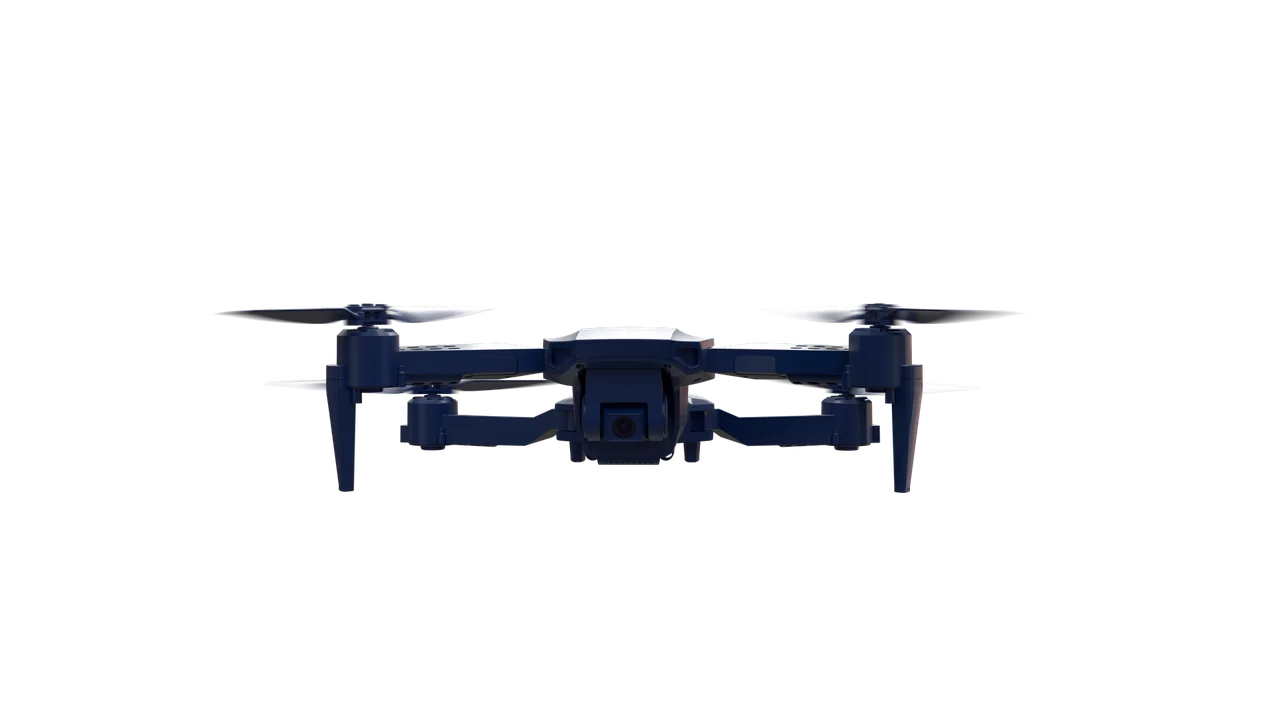
Metis Fleet — one console for unmanned aircraft and ground robots from different vendors.
Built for degraded and disconnected conditions. Safety limits and command authority are checked at the edge, beside the machines, and a person approves each plan before it runs.
Tested in simulation today. Details are available under NDA, and to Government teams on request.
Metis Fleet · Human approval
Machines plan. People approve.
In Metis Fleet a machine can draft a plan and check it, but only a person can approve it. The same rule runs through the Metis platform: what a source cannot settle goes to a named person.
Plan
One mission for aircraft and ground robots from different vendors, planned in one console.
Approve
A commander approves the exact plan. Nothing launches without that approval.
Enforce
Beside the machines, the approval and the safety limits are checked again, so they still hold if the link drops.
Record
Every command and every approval leaves a tamper-evident record.
What else Metis does
Plan for the worst day.
Design the part you need.
Two more capabilities in the Metis application. Each one says what it is based on, and what it is not.
Emergency consequence planning
Model a chemical release, an explosion, an earthquake, a flood or a wildfire on a map of the real place. Metis shows the area likely to be affected and where to stage help, following published response guidance. It is a planning aid for protecting people, not a warning system.
More on emergency planning →Design-to-print
Describe a part in plain words. Metis designs it to real dimensions and returns a file ready for a 3D printer, with the modeling done in your browser. Metis supplies the design, not the printer or the part.
More on design-to-print →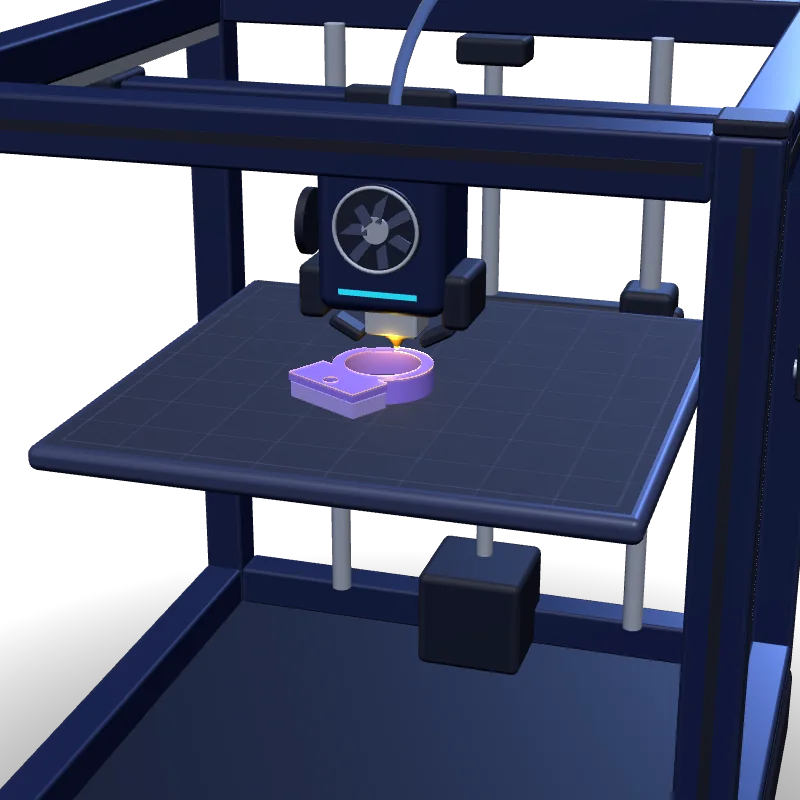
Metis Aletheia · Free scam check
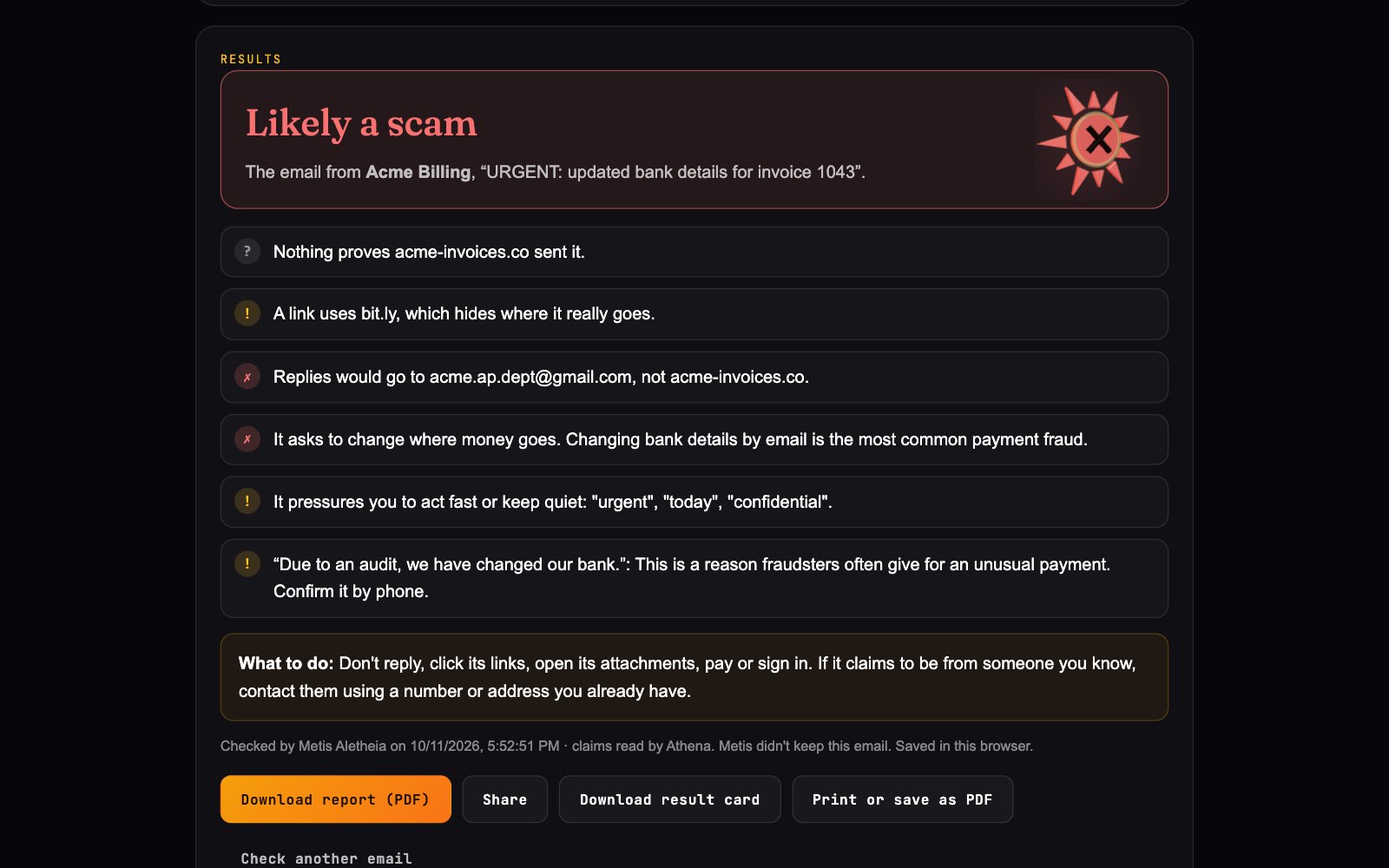
Metis Aletheia — is this email a scam? Metis asks the source.
Aletheia is Greek for truth. Paste a suspicious email, or forward it to scamcheck@metisfoundry.com, and Metis checks whether the sender's own mail servers really sent it, where its links go, its attachments and any request for money. Athena reads what the email claims. You get a plain verdict, what to do next, and a free one-page report.
Free for everyone. Metis doesn't keep the emails it checks, only the verdict.
Mavis MedBase · Medication safety
Mavis MedBase — ask the bottle. It remembers, and it warns you first.
Talking caps for the pharmacy bottles people already have, with Mavis, a voice you can simply talk to. Ask what a medicine is, what it's for and when you last took it. If two medicines shouldn't be taken close together, the cap warns you first.
Medical Assistance Voice Interactive System. In development: prototype stage, not yet for sale.

Request a briefing
Start with a briefing.
Tell us what your team acts on and where it comes from: reports, records, or a mixed team of unmanned systems. We will show you the Metis platform or Metis Fleet working, and scope a pilot around your own sources.
Who it is for
Built for the people who have to answer for the decision.
Government & defense
Facts in AI-drafted reports settled before they reach a decision, and unmanned teams where a person approves every plan.
Compliance & risk
Evidence an auditor or a regulator can re-run for themselves, instead of a score they have to take on trust.
Research & publishing
Facts settled at the source before they go out under your name.
Sign in
The platform runs in your browser.
Signing in opens the same application the desktop app runs. There is nothing to install. The desktop build is there if you would rather run it as an app, and both share one account.
- Checks, decisions and the evidence behind them, for your account
- The review queue, where a named person decides what no source could settle
- Access you can revoke, and a record of every sign-in
Platform access
Open the live platform.
Sign in on the application itself. Every workspace on it shares one account.
- Passwords are never stored in readable form, and every session can be revoked
- Sessions expire on the server and can be revoked centrally
- Every sign-in is written to the audit log
Tell us what you need checked.
Most facts your team acts on already have an issuer. Tell us what you rely on and where it comes from, and we will show you how Metis settles it, or tell you plainly where it cannot.